Post
Modern Irrigation Solutions for Crops and Produce Farms
May
Modern Irrigation Solutions for Crops and Produce Farms
Introduction
Water is one of the most critical resources in agriculture. Successful crop production depends heavily on efficient irrigation systems that provide plants with the right amount of water at the right time. As global populations continue to grow and climate change increases pressure on water supplies, modern irrigation solutions have become essential for sustainable farming and high agricultural productivity.
Traditional irrigation methods often waste significant amounts of water through evaporation, runoff, and inefficient distribution. Modern irrigation technology addresses these challenges by improving water management, reducing waste, and enhancing crop health. Whether managing vegetable farms, fruit orchards, grain fields, or commercial produce operations, farmers now rely on advanced irrigation systems to optimize yields and maintain profitability.
Modern irrigation solutions combine automation, precision agriculture, smart monitoring, and sustainable water management practices to help farms operate more efficiently. These systems support healthier crops, lower operational costs, and long-term environmental sustainability.
This comprehensive guide explores the most effective modern irrigation solutions for crops and produce farms, their benefits, installation considerations, and how advanced irrigation technology is transforming modern agriculture.

Why Modern Irrigation Is Important in Agriculture
Efficient irrigation is essential because crops require consistent moisture for healthy growth and maximum productivity.
Benefits of Modern Irrigation Systems
Advanced irrigation systems offer multiple advantages for farmers:
- Improved water efficiency
- Higher crop yields
- Reduced labor requirements
- Better soil moisture control
- Lower water waste
- Enhanced crop quality
- Increased farm profitability
Modern irrigation technology helps farmers maximize production while conserving valuable water resources.
Challenges Facing Agricultural Water Management
Farmers worldwide face increasing irrigation challenges, including:
- Water shortages
- Climate variability
- Rising production costs
- Soil degradation
- Drought conditions
- Uneven rainfall patterns
Modern irrigation solutions help farms adapt to these environmental and economic pressures.
Types of Modern Irrigation Systems
Different agricultural operations require different irrigation methods depending on crop type, soil conditions, farm size, and climate.
Drip Irrigation Systems
Drip irrigation is one of the most efficient irrigation methods used in modern agriculture.
How Drip Irrigation Works
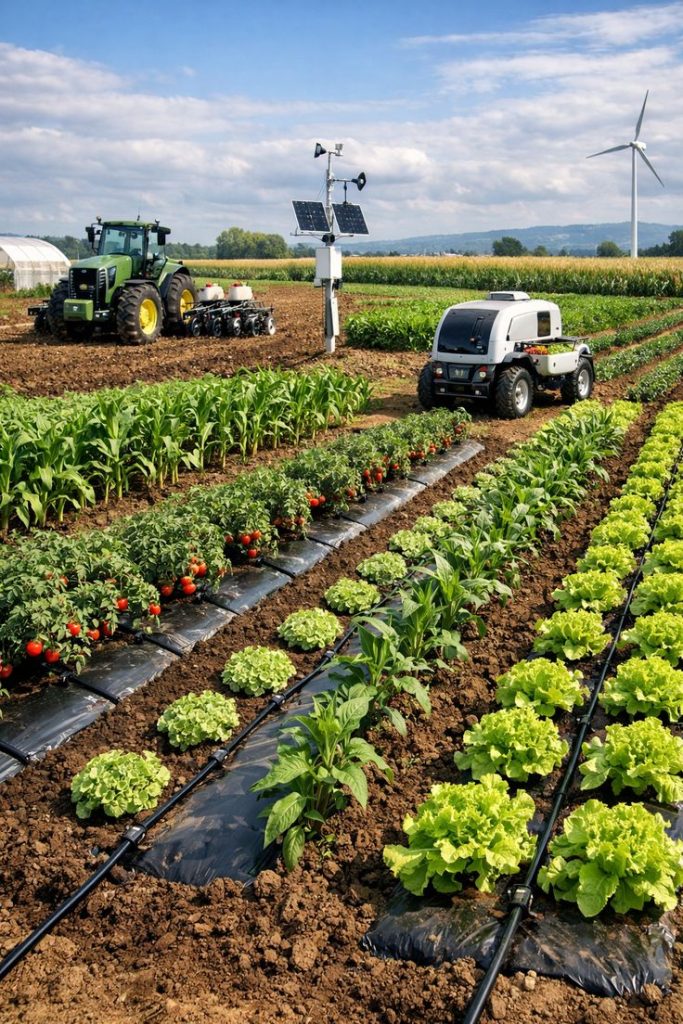
Drip irrigation delivers water directly to the root zone through pipes, tubing, and emitters.
This method minimizes:
- Evaporation
- Water runoff
- Soil erosion
- Nutrient loss
Benefits of Drip Irrigation
Drip irrigation offers several important advantages:
- High water efficiency
- Reduced weed growth
- Improved fertilizer absorption
- Lower disease risk
- Consistent soil moisture
Drip systems are widely used for:
- Vegetable farms
- Fruit orchards
- Vineyards
- Greenhouse production
- Commercial produce farming
Challenges of Drip Irrigation
Although highly efficient, drip systems require:
- Regular maintenance
- Filter cleaning
- Proper pressure management
- Initial installation investment
Proper management ensures long-term irrigation performance.
Sprinkler Irrigation Systems
Sprinkler systems simulate natural rainfall by spraying water across agricultural fields.
Types of Sprinkler Systems
Common sprinkler irrigation systems include:
- Center pivot irrigation
- Lateral move systems
- Portable sprinklers
- Solid set systems
These systems are suitable for large-scale farming operations.
Advantages of Sprinkler Irrigation
Sprinkler systems provide:
- Uniform water distribution
- Flexibility across different crops
- Efficient coverage of large areas
- Cooling effects during heat stress
They are commonly used for:
- Grain crops
- Pastures
- Vegetable fields
- Turf farming
Limitations of Sprinkler Irrigation
Sprinkler systems may experience:
- Evaporation losses
- Wind interference
- Higher energy consumption
- Potential leaf disease from excessive moisture
Farmers should manage watering schedules carefully to maximize efficiency.
Smart Irrigation Technology
Modern agriculture increasingly relies on smart irrigation systems that use technology to optimize water management.
Soil Moisture Sensors
Soil moisture sensors monitor water levels within the soil and help determine when irrigation is necessary.
Benefits of Soil Sensors
These sensors help farmers:
- Prevent overwatering
- Reduce water waste
- Improve crop health
- Increase irrigation accuracy
Real-time monitoring improves farm decision-making.
Automated Irrigation Controllers
Automated irrigation systems use programmable controllers to manage irrigation schedules efficiently.
Features may include:
- Timer-based watering
- Weather integration
- Remote control access
- Smartphone monitoring
- Flow rate management
Automation reduces labor costs and improves irrigation consistency.
Weather-Based Irrigation Systems
Weather-responsive irrigation technology adjusts watering schedules based on environmental conditions.
These systems analyze:
- Rainfall forecasts
- Temperature
- Humidity
- Wind speed
- Solar radiation
Smart irrigation prevents unnecessary water usage during rainy periods.
Precision Irrigation in Modern Farming
Precision agriculture has transformed irrigation management through data-driven farming practices.
What Is Precision Irrigation?
Precision irrigation applies water based on the specific needs of crops, soil zones, and environmental conditions.
This method uses technologies such as:
- GPS mapping
- Satellite imaging
- Field sensors
- Drone monitoring
- Data analytics
Precision irrigation improves both productivity and sustainability.
Benefits of Precision Irrigation
Advantages include:
- Reduced water consumption
- Improved yield quality
- Better nutrient management
- Lower operational costs
- Increased environmental protection
Precision agriculture helps farmers maximize resource efficiency.
Sustainable Irrigation Practices
Sustainability is becoming increasingly important in agricultural water management.
Water Conservation Techniques
Modern farms use multiple strategies to conserve water.
Mulching
Mulch helps reduce evaporation and maintain soil moisture.
Rainwater Harvesting
Collected rainwater can supplement irrigation supplies during dry periods.
Conservation Tillage
Reduced tillage helps retain soil moisture and improve water infiltration.
Efficient Scheduling
Irrigating during cooler times of day minimizes evaporation losses.
Sustainable practices support long-term agricultural productivity.
Importance of Irrigation for Produce Farms
Produce farms require precise water management because fruits and vegetables are highly sensitive to moisture levels.
Impact on Crop Quality
Proper irrigation improves:
- Fruit size
- Vegetable appearance
- Nutrient quality
- Shelf life
- Harvest consistency
High-quality produce increases market value and customer satisfaction.
Preventing Crop Stress
Inconsistent watering can cause:
- Fruit cracking
- Blossom drop
- Bitter vegetables
- Uneven growth
- Reduced yields
Reliable irrigation systems help maintain stable growing conditions.
Irrigation Solutions for Different Crop Types
Different crops have different water requirements.
Vegetable Crops
Vegetables often require frequent and controlled irrigation.
Common irrigation methods include:
- Drip irrigation
- Micro-sprinklers
- Raised bed irrigation
These systems improve water efficiency and reduce disease risks.
Fruit Orchards
Fruit trees benefit from deep and consistent watering.
Drip irrigation is commonly used in orchards because it delivers water directly to tree roots.
Grain Crops
Large-scale grain production often uses center pivot sprinkler systems for efficient field coverage.
Greenhouse Farming
Greenhouse irrigation systems rely heavily on automation and precision watering.
Controlled environments require:
- Timed irrigation
- Fertigation systems
- Humidity monitoring
- Water recycling systems
Modern greenhouse technology supports year-round crop production.
Fertigation Systems in Modern Agriculture
Fertigation combines irrigation with fertilizer application.
Benefits of Fertigation
This method provides:
- Precise nutrient delivery
- Improved fertilizer efficiency
- Reduced nutrient waste
- Faster nutrient absorption
- Lower labor costs
Fertigation is especially effective in drip irrigation systems.
Common Fertigation Applications
Fertigation is widely used for:
- Tomatoes
- Peppers
- Cucumbers
- Strawberries
- Citrus orchards
Integrated nutrient management improves crop performance.
Challenges in Modern Irrigation Management
Although advanced irrigation systems offer many benefits, farmers still face several operational challenges.
Initial Installation Costs
Modern irrigation systems often require significant upfront investment.
Costs may include:
- Pipes and tubing
- Pumps
- Sensors
- Controllers
- Filtration systems
However, long-term savings often justify the investment.
Maintenance Requirements
Irrigation equipment requires regular maintenance to ensure efficiency.
Farmers should inspect:
- Filters
- Pumps
- Valves
- Emitters
- Pipes
Routine maintenance prevents system failures.
Water Quality Issues
Poor water quality can clog irrigation systems and damage crops.
Common issues include:
- Sediment buildup
- Salinity
- Chemical contamination
- Biological growth
Water filtration and testing improve irrigation reliability.
Role of Technology in the Future of Irrigation
Agricultural technology continues revolutionizing irrigation management.
Artificial Intelligence in Irrigation
AI-powered systems analyze crop data and optimize irrigation schedules automatically.
AI can help farmers:
- Predict water needs
- Detect irrigation leaks
- Improve efficiency
- Reduce operational costs
Drone-Assisted Irrigation Monitoring
Agricultural drones monitor crop stress and identify dry areas within fields.
Drone technology supports precision irrigation planning.
Internet of Things (IoT) Agriculture
IoT-connected irrigation systems allow real-time monitoring and remote management.
Smart farming networks improve overall agricultural efficiency.
Environmental Benefits of Modern Irrigation
Efficient irrigation systems help protect natural resources and support sustainable farming.
Reduced Water Waste
Modern systems minimize evaporation and runoff.
Improved Soil Protection
Controlled watering reduces soil erosion and nutrient leaching.
Lower Energy Consumption
Efficient irrigation reduces pumping requirements and fuel usage.
Sustainable Food Production
Water-efficient farming supports long-term global food security.
Common Irrigation Mistakes Farmers Should Avoid
Improper irrigation management can damage crops and reduce productivity.
Overwatering
Excessive watering can cause:
- Root diseases
- Nutrient loss
- Soil compaction
- Reduced oxygen levels
Underwatering
Insufficient irrigation leads to:
- Wilting
- Poor growth
- Low crop yields
- Heat stress
Poor Irrigation Scheduling
Watering at incorrect times increases evaporation and reduces efficiency.
Ignoring Maintenance
Neglected irrigation systems may develop leaks, clogs, and uneven water distribution.
Regular system inspections improve long-term performance.
Conclusion
Modern irrigation solutions are transforming agriculture by improving water efficiency, increasing crop productivity, and supporting sustainable farming practices. Advanced irrigation systems such as drip irrigation, smart controllers, soil moisture sensors, and precision agriculture technologies help farmers manage water resources more effectively while reducing operational costs.
Whether used in vegetable farms, orchards, greenhouses, or large commercial crop operations, modern irrigation technology provides essential support for healthy plant growth and reliable agricultural production. Sustainable irrigation practices also help conserve water, protect soil health, and reduce environmental impact.
As climate challenges and global food demand continue increasing, efficient irrigation systems will become even more important in modern agriculture. Farmers who invest in modern irrigation solutions will be better prepared to improve crop quality, maximize yields, and maintain long-term farming success in an increasingly competitive agricultural industry.
