May
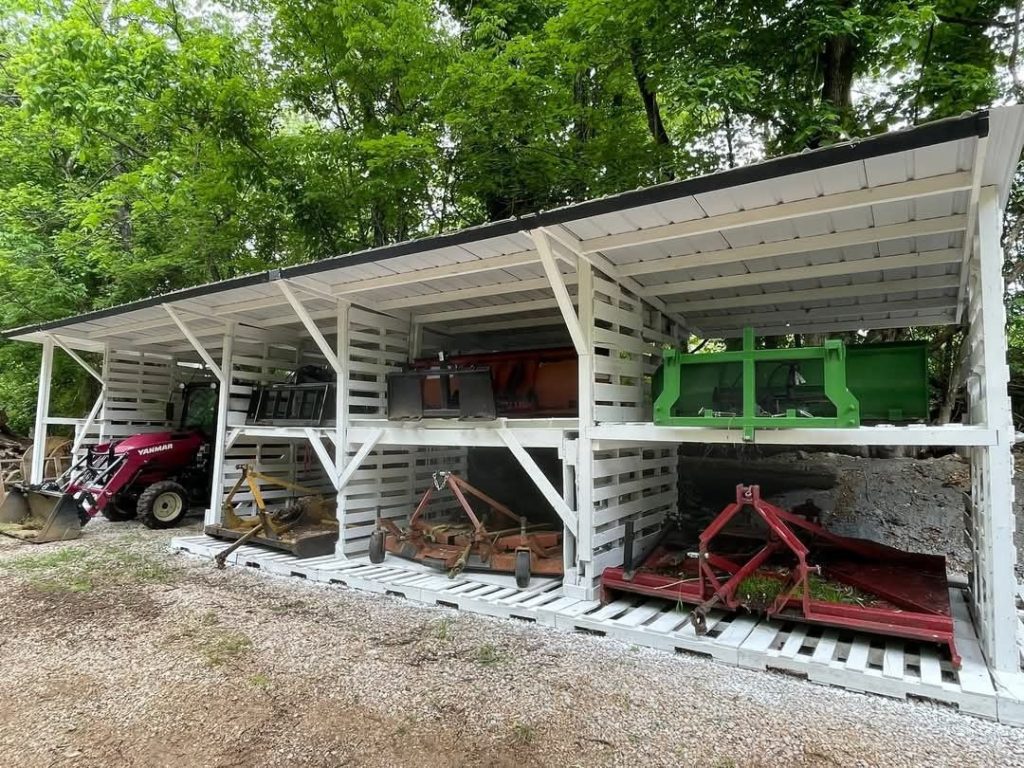
Farm Storage and Handling Equipment
The Defense and Preservation Masterclass: Pest Control and Post-Harvest Management
In the high-stakes game of agriculture, the work doesn’t end once the seed becomes a plant, nor does it end once that plant is harvested. A farmer is effectively a manager of two critical phases: Defense (protecting the crop while it grows) and Preservation (protecting the value of the crop after it is picked).
If you view the farm as a production pipeline, pests are the “system intruders” trying to corrupt the data (the crop), while poor storage is the “data leak” that causes value to vanish before it reaches the end-user. To run a profitable operation in 2026, you need a robust strategy for both.

Part I: The War on Pests—Choosing Your Arsenal
Pests—ranging from microscopic fungi to voracious insects and invasive weeds—are the original hackers of the biological world. They are opportunistic, adaptive, and capable of wiping out a season’s worth of profit in a matter of days. Modern pest control is moving away from “carpet bombing” with chemicals toward a more nuanced, “Integrated Pest Management” (IPM) approach.
1. The Chemical Vanguard (Synthetic Pesticides) – Farm Storage and Handling Equipment
Chemical pesticides remain the most common tool due to their sheer speed and efficacy. When an infestation hits a critical threshold, you often need a “fast-acting” solution to stop the bleeding.
Insecticides: Target nervous systems or growth cycles of insects.
Herbicides: Target the metabolic pathways of weeds.
Fungicides: Prevent the spread of spores in humid conditions.
The Trade-off: While effective, chemicals carry the risk of “The Resistance Treadmill.” If used too frequently, pests evolve resistance, requiring stronger or more toxic doses.
2. The Biological “Special Forces”
Biological control is the practice of using “good bugs” to fight “bad bugs.” It is nature’s own security system.
Predators: Releasing ladybugs to eat aphids.
Parasitoids: Tiny wasps that lay eggs inside caterpillars, neutralizing them from the inside out.
Microbials: Using bacteria like Bacillus thuringiensis (Bt) which are toxic to specific larvae but harmless to humans and pollinators.
3. Organic and Botanical Solutions
Derived from plants or minerals, these products have shorter “half-lives,” meaning they break down quickly in the environment and leave fewer residues.
Neem Oil: Disrupts the hormonal systems of insects so they forget to eat or mate.
Pyrethrins: Derived from chrysanthemum flowers, providing a quick “knockdown” of pests with low mammalian toxicity.
Comparison: Pest Control Product Categories
| Type | Speed | Environmental Impact | Residual Effect |
| Chemical | Very Fast | High | Long-lasting |
| Biological | Slow | Very Low | Self-sustaining |
| Organic | Moderate | Low | Short-lived |
Best Practices for Integrated Pest Management (IPM)
The “spray first, ask questions later” mentality is being replaced by a four-step logic gate:
Identification: Is that bug a “foe” or a “friend”? Many farmers accidentally kill the very predators that were keeping the pests in check.
Monitoring: Use pheromone traps or drones to identify when the pest population hits the “Economic Threshold”—the point where the cost of the damage exceeds the cost of the treatment.
Mechanical/Cultural Control: Can you use row covers? Can you rotate crops to break the pest’s life cycle?
Targeted Application: If you must use chemicals, use a “sniper” approach rather than a “shotgun” approach. Use the most specific product at the lowest effective dose.
Part II: The Post-Harvest Gap—Storage and Handling Equipment
It is a heartbreaking statistic in global agriculture: we lose nearly one-third of all food produced between the field and the table. Most of this loss occurs because of “Post-Harvest Failures.” Once a crop is harvested, it is a ticking clock of respiration and decay. Proper storage equipment is what stops that clock.
1. The Fortress: Bins and Silos
For grain farmers, the silo is the most important piece of infrastructure. It isn’t just a giant can; it is a controlled environment.
Aeration Systems: Grain “breathes.” If it sits in a stagnant pile, it generates heat and moisture, leading to “hot spots” and mold. Silos equipped with high-volume fans pull air through the grain mass to keep it cool and dry.
Moisture Sensors: Modern silos use cables with sensors every few feet to monitor the temperature and humidity. If the “Relative Humidity” ($RH$) rises, the system automatically triggers the fans.
2. The Cold Chain: Refrigeration and Cold Storage
For fruits, vegetables, and dairy, “Heat is the Enemy.” Every hour a harvested tomato spends in the sun reduces its shelf life by a day.
Pre-cooling Units: Forced-air cooling or hydro-cooling pulls the “field heat” out of the product immediately after harvest.
Controlled Atmosphere (CA) Storage: This is the pinnacle of storage tech. In these sealed units, oxygen levels are lowered and $CO_2$ levels are raised to “put the fruit to sleep,” slowing down its ripening process. This is how we are able to eat “fresh” apples in April that were harvested in October.
3. Handling and Logistics: Moving with Precision
Every time you drop a piece of fruit, you create a “bruise”—a site for fungal infection.
Conveyor Systems: Soft-flight or belt conveyors reduce the physical impact on the crop compared to manual shoveling.
Grading and Sorting Lines: Using computer vision, these machines automatically sort produce by size, color, and weight, ensuring that only the highest quality products go into long-term storage (where they are less likely to rot).
The Economics of Preservation
Why invest $50,000 in a cold storage unit? Let’s look at the math.
If a farmer harvests 100 tons of produce and loses 30% due to rot and pests, they only have 70 tons to sell. If, by investing in better handling and storage, they reduce that loss to 5%, they now have 95 tons to sell.
The ROI of Infrastructure: On many farms, the “cheapest” way to increase production isn’t to plant more acres—it’s to save more of what you’ve already grown.

Critical Best Practices for Storage
The “First In, First Out” (FIFO) Rule: Always organize your storage so that the oldest stock is moved first. Digital tracking and barcodes have made this significantly easier.
Sanitation is 90% of the Battle: A single moldy orange can ruin a whole bin. Storage areas must be cleaned and disinfected between seasons to kill dormant spores and eggs.
Atmospheric Management: For grains, the goal is typically 12–14% moisture content. Anything higher is a playground for mold; anything lower makes the grain brittle and lose weight (and therefore value).

Conclusion: Closing the Loop
Agriculture is a discipline of narrow margins. You cannot afford to lose your crop to a pest infestation in July, and you certainly cannot afford to lose it to a moldy silo in November.
Smart pest control (Defense) ensures that your “system” remains free of intruders, while advanced storage and handling (Preservation) ensures that your “output” reaches the market in peak condition. By investing in the right products—from biological predators to automated silos—you aren’t just farming; you are engineering a stable, sustainable, and profitable food supply chain.
Investing in these tools isn’t just an expense; it is the ultimate insurance policy for the modern farmer.
Are you ready to fortify your farm? Between the “Defense” of pest control and the “Preservation” of storage, which area do you feel currently has the most “data leakage” in your operation?
